While supplies last, we will have limited-edition MCM shirts for sale each week at the Mission Community Market. These awesome tees were locally-printed by Headline Shirts in the Mission! We currently have women’s shirts in XS, S, M, and L as well as children’s shirts in 2T, 4T, 6, 8, and 10. Men’s shirts, as well as additional sizes for ladies and kids, will be coming soon.
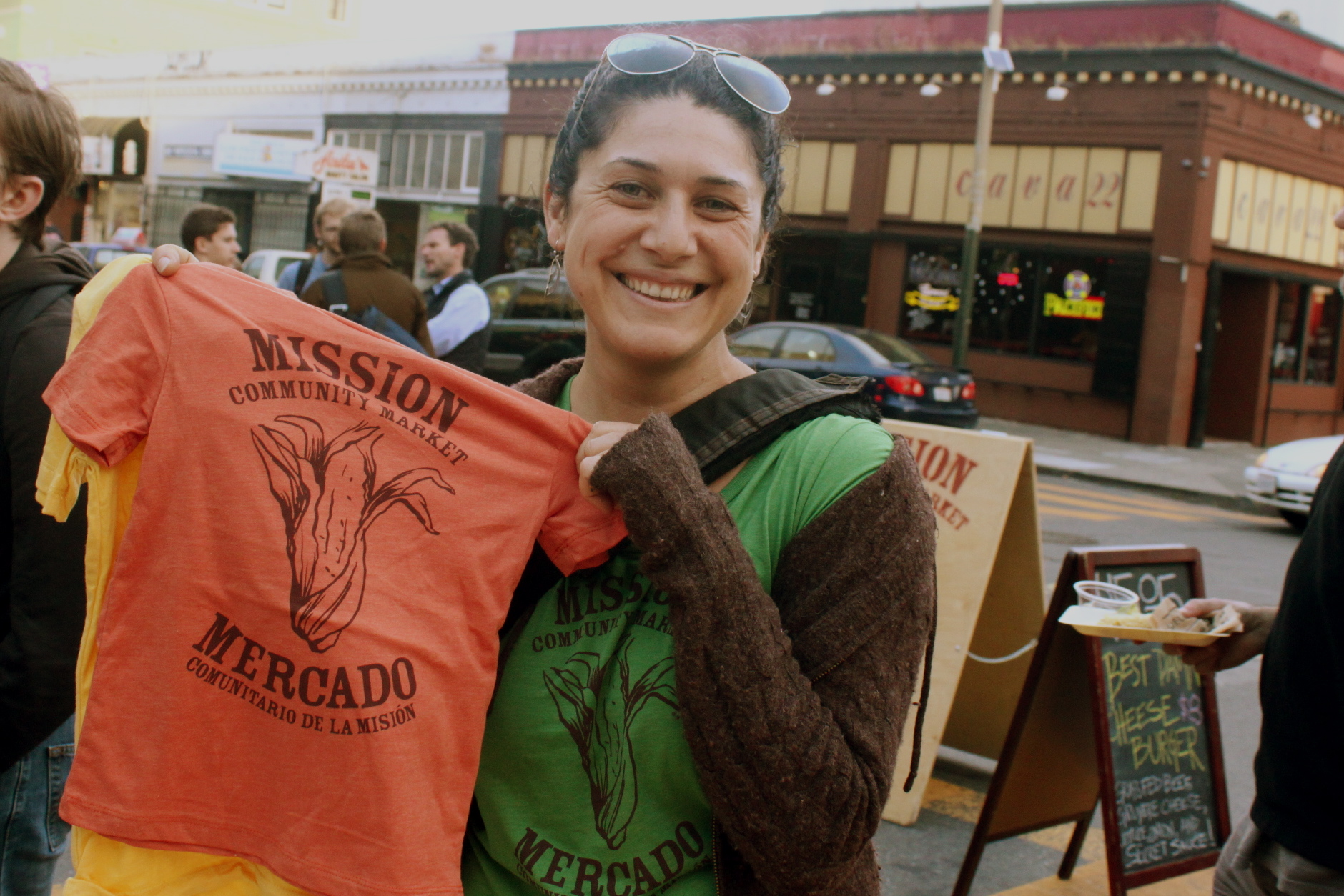
Though we may eventually sell these super cool tees online, right now the only way to get your hands on the hottest top this side of Market Street is to buy one at 22nd and Bartlett on Thursday afternoons. Women’s shirts are $15 and children’s are $9, for a limited time. And if you want one of each, just ask for the Mommy-and-Me special of one adult and one child shirt for the unbelievably low price of $20!
Come on down this Thursday and get ready to represent your favorite community market all over SF!